The Forgotten Founder: The Triumphs and Tragedies of Daniel D. Tompkins
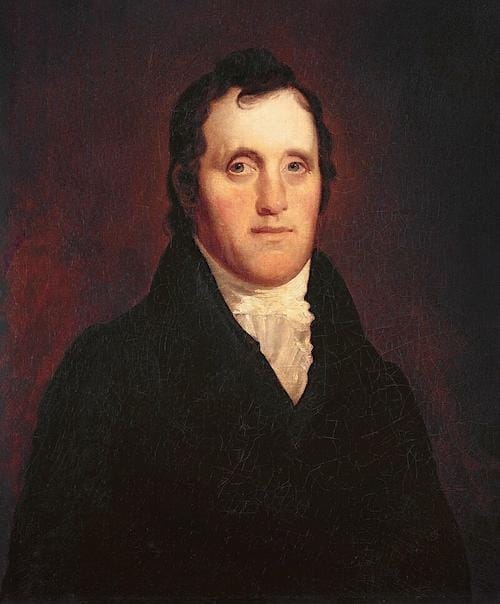
Quick, name the first six Vice Presidents of the United States. You can likely name Adams, Jefferson, and maybe even Aaron Burr. But what about the sixth man to hold the office, the one who served two full terms alongside President James Monroe?
His name was Daniel D. Tompkins, and he is arguably one of the most consequential and yet forgotten figures in American political history. He was a popular governor, a progressive champion of human rights, and a wartime leader whose personal sacrifices quite literally bankrupted him. His story is not just a historical footnote; it is a gripping, tragic tale of service, ambition, and the immense personal cost of public duty.
The Titan of New York
Long before he reached the vice presidency, Daniel Tompkins was the dominant political force in New York. Elected governor in 1807 at the remarkably young age of 33, he was a charismatic and effective leader. He was not a distant aristocrat but a man deeply involved in the growth and defense of his state. He strengthened the state militia, invested in infrastructure, and guided New York through a period of immense growth, cementing its status as the “Empire State.”
His leadership was so popular that he was even floated as a potential presidential candidate, seen by many as a worthy successor to the Virginia dynasty of Jefferson and Madison. But a different war would define his legacy.
The Governor Who Bankrolled a War
When the War of 1812 broke out, Governor Tompkins became one of the most important figures in the entire war effort. While the federal government struggled with funding and New England states were openly hostile to the conflict, Tompkins took decisive action. As commander of the New York militia, he was responsible for defending the critical northern frontier against British invasion from Canada.
Facing a recalcitrant legislature and reluctant bankers, Tompkins made a fateful decision. He began to personally finance the war effort. Using his own credit and borrowing heavily against his own name, he raised, equipped, and paid the troops necessary for the state’s defense. He effectively bankrolled the war in the north, ensuring that soldiers had munitions and that fortifications were built. It was an act of immense patriotism, a display of leadership when the nation needed it most. It was also an act that would shatter his life.
A Champion of Freedom
Beyond his wartime leadership, Tompkins championed a cause that places him on the right side of history. Long before the national abolitionist movement gained widespread traction, Governor Tompkins used his power to dismantle the institution of slavery in New York.
In 1817, he pushed a landmark bill through the legislature that set a firm date for the final emancipation of all enslaved people within the state. The law decreed that on July 4, 1827, every enslaved person in New York would be free. It was one of the most significant anti-slavery actions taken by any state in the nation’s early history, and it was a direct result of Tompkins’s persistent moral and political pressure.
The Vice Presidency and the Fall
In 1816, Tompkins’s national reputation secured him the vice presidency on the ticket with James Monroe. They won in a landslide. The position should have been the crowning achievement of his career. Instead, it was a hollow prize that coincided with his personal ruin.
The vast and poorly documented debts he had incurred during the war came due. A bitter and complex dispute arose between him, the state of New York, and the federal government over the millions of dollars he had raised. He was accused of mismanaging funds, his name dragged through the mud. Though he was eventually exonerated, with audits proving he was actually owed a substantial sum, the endless legal battles and public accusations destroyed his finances and his spirit.
Haunted by debt and public disgrace, Tompkins fell into a deep depression and alcoholism. He was often absent from his duties as presiding officer of the Senate, his health failing precipitously. He finished his second term a broken man.
Daniel D. Tompkins died on June 11, 1825, just three months after leaving office. He was only 50 years old. He left his family destitute, his great fortune and reputation consumed by his service to a country that was slow to repay its debt to him. He is a stark reminder that legacy is complex, and that even the most pivotal figures, the ones who sacrifice everything for the nation, can be lost to the pages of time.