Lost in the In-Between: Why Eraserhead Still Haunts Our Dreams (and Nightmares)
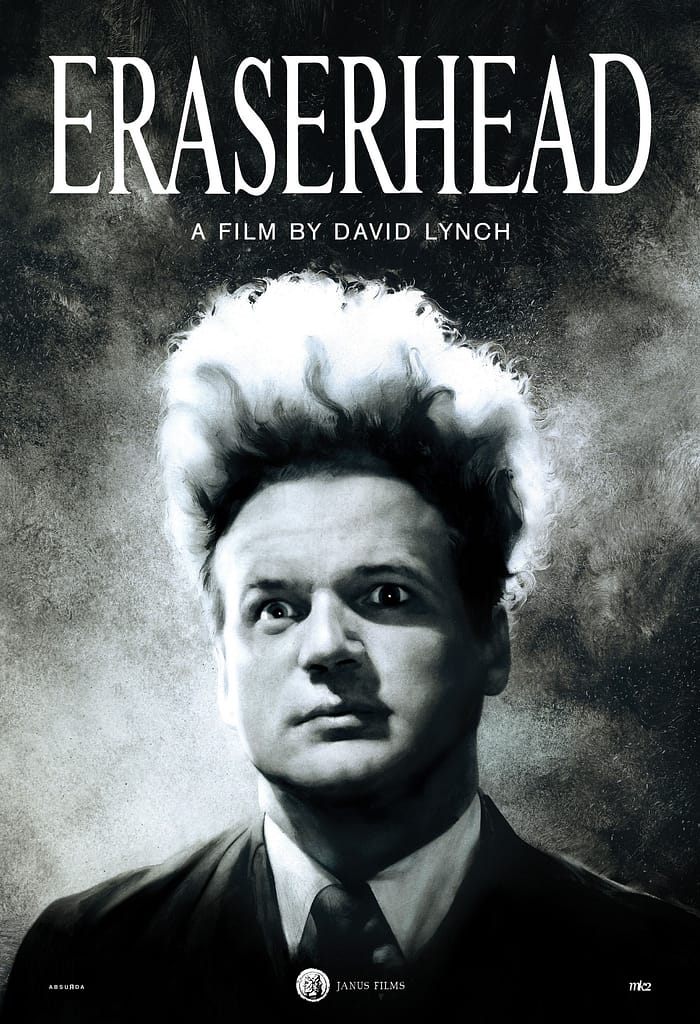
David Lynch’s debut feature, Eraserhead (1977), isn’t just a film; it’s an experience. A deeply unsettling, profoundly bizarre, and undeniably captivating experience that continues to baffle and intrigue audiences decades later. To call it “weird” is a gross understatement; it’s a dive into the subconscious, a descent into industrial dread, and a meditation on the anxieties of parenthood, all wrapped in a grainy black and white nightmare.
So, why does Eraserhead stick with us long after the credits (or rather, the barely perceptible end) roll?
A Symphony of Discomfort:
Lynch masterfully creates an atmosphere of unrelenting unease. The film is saturated with a cacophony of industrial hums, grinding machinery, and piercing shrieks, a sonic landscape that feels suffocating. The stark black and white cinematography adds to the claustrophobic feel, highlighting the grime and decay of Henry Spencer’s (Jack Nance) desolate world. We are immersed in a world where nothing feels right, where reality bends and twists into something utterly alien.
The Baby: A Metaphor for Something Unspeakable:
Let’s talk about the elephant in the room (or rather, the mutant chicken fetus in the cradle). The creature that Henry and Mary X (Charlotte Stewart) are forced to raise is arguably the most disturbing thing in the entire film. Its appearance is indescribable (a testament to the special effects artistry), and its incessant crying is grating and maddening.
But the baby is more than just a creepy prop. It’s a potent symbol that can be interpreted in numerous ways:
– The Fear of Parenthood: The film explores the anxieties and responsibilities that come with raising a child, amplified to a grotesque extreme. The baby represents the unknown, the unmanageable, and the overwhelming burden that parenthood can sometimes feel like.
– The Dehumanization of Industrial Society: The baby, born in a sterile and polluted environment, can be seen as a product of a society that has lost its connection to nature and humanity. It’s a symbol of decay and the consequences of technological advancement without ethical consideration.
– Personal Trauma and Repression: Ultimately, the baby is a reflection of Henry’s own internal anxieties and repressed desires. It’s a manifestation of his fears and insecurities, brought to life in a terrifying and visceral way.
More Than Just Shock Value:
Eraserhead isn’t just about shock value. While it certainly pushes boundaries and features disturbing imagery, it’s also a deeply personal and thought-provoking film. It explores themes of isolation, alienation, and the struggle to find meaning in a meaningless world.
Why Should You Watch It? (If You Dare!)
– To experience a truly unique cinematic vision: There’s nothing quite like Eraserhead . It’s a film that stays with you, provoking thought and conversation long after you’ve seen it.
– To appreciate Lynch’s artistry: Eraserhead is a masterclass in atmosphere, sound design, and visual storytelling. It showcases Lynch’s unique ability to tap into the subconscious and create truly unforgettable images.
– To confront your own anxieties and fears: Eraserhead can be a challenging film to watch, but it can also be a cathartic experience. By confronting the darkness and the grotesque, we can perhaps gain a better understanding of ourselves.
Final Thoughts:
Eraserhead is not a film for everyone. It’s challenging, disturbing, and often incomprehensible. But it’s also a masterpiece of surrealist cinema, a testament to the power of imagination, and a haunting exploration of the human condition. If you’re looking for a film that will stay with you long after you’ve seen it, Eraserhead is definitely worth a watch. Just be prepared to lose a few nights of sleep in the process.
Have you seen Eraserhead ? What are your thoughts on the film? Share your interpretations in the comments below!