From Little Tom to a Lasting Legacy: The Origins of the Tompkins Surname
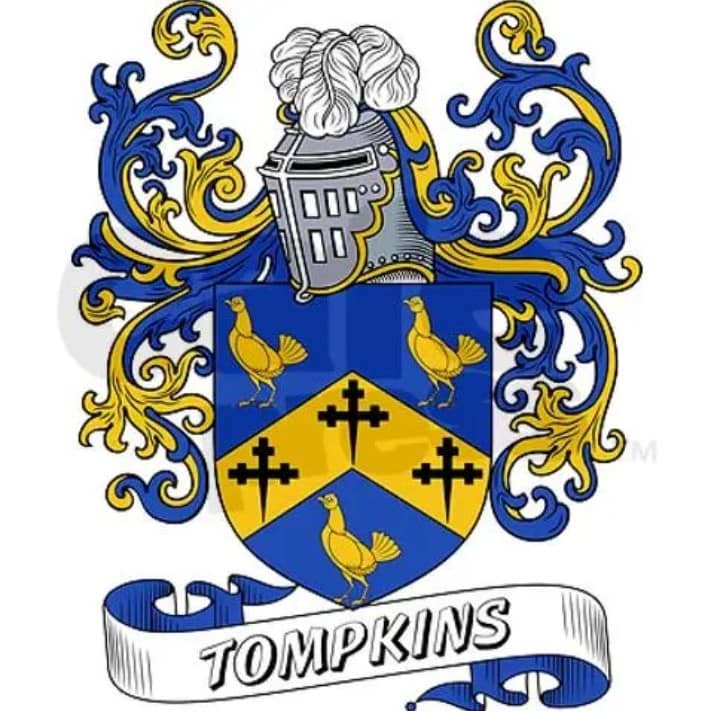
What’s in a name? For many of us, our surname is a simple identifier, a word we’ve written countless times without a second thought. But every surname is a breadcrumb trail leading back through history, a whisper from ancestors we’ve never met. If your last name is Tompkins, or if you’ve ever been curious about this classic-sounding name, you’re in for a treat. The story behind Tompkins is a fascinating journey into language, religion, and the way our ancestors lived.
Let’s unpack the past and discover the meaning behind the Tompkins name.
Breaking It Down: Son of Little Tom
At its heart, Tompkins is a patronymic surname , which is a fancy way of saying it’s based on a father’s name. To understand it, we need to break the name into its three parts: Tom + kin + s .
Tom: This is the easy part! “Tom” is a universally recognized nickname for Thomas . As we’ll see, the popularity of the name Thomas is central to the whole story.
-kin: This is a diminutive suffix that was common in Middle English and Dutch. It means “little” or “young.” Think of other names like “Wilkin” (Little Will) or “Hawkin” (Little Hal/Harry). So, “Tompkin” literally means “Little Tom.” This could have referred to the son of a man named Tom, or perhaps a younger Tom in a family to distinguish him from an older Tom.
-s: The “s” at the end is possessive, meaning “son of” or “of the family of.” This is a very common feature in English and especially Welsh surnames (think Jones, Williams, or Davies).
Put it all together, and the surname Tompkins means “son of Little Tom.” It’s a multi-generational snapshot packed into a single word: a grandfather named Thomas, a son nicknamed Tompkin, and a grandson who took the family name Tompkins.
The Saint Who Made It All Possible
So, why was the name Thomas so popular in the first place? For that, we can thank one of the most famous figures in Christianity: St. Thomas the Apostle.
The name Thomas has its roots in the Aramaic language, from the word Ta’oma , meaning “twin.” In the New Testament, St. Thomas was one of the twelve apostles, famously known as “Doubting Thomas” for his initial disbelief in Jesus’s resurrection.
Following the Norman Conquest of England in 1066 and during the subsequent Crusades, biblical and saints’ names spread like wildfire across Europe. Parents named their sons after revered figures, and Thomas became one of the most popular boy’s names in medieval England. With so many men named Thomas, it became necessary to create variations to tell them apart, leading to surnames like Thomas, Thompson (Tom’s son), and, of course, Tompkins.
Geographical Roots and Variations
The Tompkins surname first emerged in the historical records of England and Wales during the 12th and 13th centuries, as the use of hereditary surnames became standard practice. Its presence is particularly strong along the Anglo-Welsh border, where the “-s” patronymic ending is a common feature.
Because spelling wasn’t standardized until centuries later, the name appeared in many forms. If you’re researching our family tree, you might come across a variety of spellings, including:
Tomkins
Thompkins (adding the ‘h’ for a more formal look)
Tomkyns
Thomkins
Tompkyn
These are all branches of the same family tree, with the spelling often changing based on the preference of the person writing it down.
The Tompkins Legacy: From Europe to the World
Like many British surnames, the Tompkins name spread across the globe with waves of migration. The 17th century saw early Tompkins families seeking new opportunities in North America. One of the earliest recorded was Ralph Tompkins , who sailed from London to Salem, Massachusetts, in 1635, of which I am not a direct descendent.
Over the centuries, individuals bearing the Tompkins name have made their mark in all walks of life. One of the most prominent was Daniel D. Tompkins , who served as the sixth Vice President of the United States under President James Monroe from 1817 to 1825.
Our Connection to History
So, whether you’re a Tompkins, a Tomkins, or a Thompkins, your name carries a direct link to the medieval world. It speaks of a time when your ancestor was known simply as the “son of Little Tom,” a name that has since traveled through generations and across oceans.
It’s a reminder that every family has a story, and sometimes, the first clue is hidden in the very name we carry.