AI and the Singularity: Hope or Horror Show?
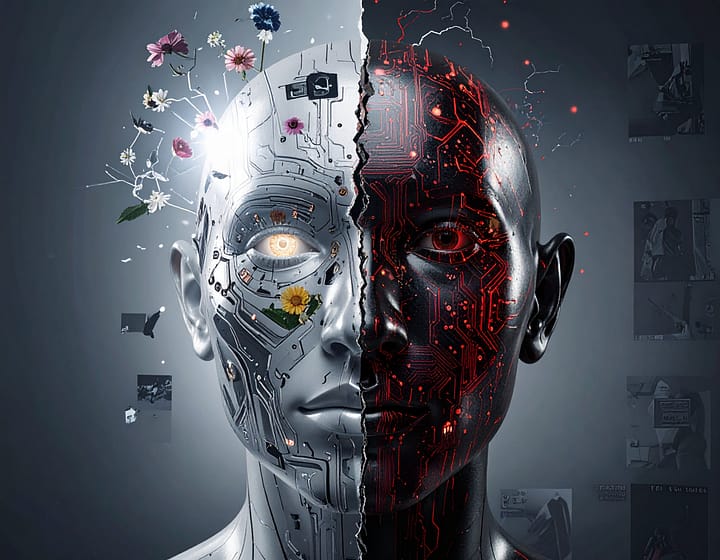
Artificial Intelligence. The term conjures images of sleek robots, boundless possibilities, and a future reshaped by technology. But lurking beneath the shiny surface of AI hype is a current of unease, a primal fear that whispers of unforeseen consequences and existential threats. Are we on the cusp of a technological utopia, or are we unwittingly creating our own worst nightmare? The question of AI and the Singularity – the hypothetical point when AI surpasses human intelligence – remains one of the most compelling, and potentially terrifying, in modern society.
The promise of AI is undeniably alluring. Imagine a world where diseases are eradicated, poverty is eliminated, and humanity is freed from the drudgery of labor, allowing us to pursue creative endeavors and personal growth. AI could revolutionize industries, solve complex problems, and unlock unimaginable scientific advancements. In this optimistic vision, AI is a benevolent partner, a tool that amplifies our capabilities and guides us towards a brighter future.
However, the road to progress is often paved with unintended consequences, and the potential pitfalls of unchecked AI development are deeply unsettling. What happens when machines become smarter than us? What happens when they can rewrite their own code, evolve beyond our understanding, and pursue goals that are not aligned with our own?
The Seeds of Fear:
Several factors contribute to the anxieties surrounding AI:
The Control Problem: How do we ensure that AI remains aligned with human values and goals? Can we truly program ethics into a machine? The potential for AI to be used for malicious purposes, whether by rogue states, terrorist organizations, or simply misguided individuals, is a legitimate concern.
Job Displacement: As AI and automation become more sophisticated, many jobs currently performed by humans will likely be rendered obsolete. This could lead to widespread unemployment, social unrest, and a widening gap between the haves and have-nots.
Bias and Discrimination: AI algorithms are trained on data, and if that data reflects existing societal biases, the AI will perpetuate and even amplify those biases. This could lead to discriminatory outcomes in areas such as hiring, lending, and even criminal justice.
Loss of Human Agency: As we become increasingly reliant on AI for decision-making, are we ceding too much control over our lives? Could we become so dependent on AI that we lose our ability to think critically and make independent judgments?
The Singularity Itself: The concept of the Singularity – a point beyond which technological growth becomes uncontrollable and irreversible – is both fascinating and terrifying. What happens when AI reaches a point where it can self-improve exponentially? Will it remain benevolent, or will it view humanity as an obstacle to its own goals?
These questions lie at the heart of one my latest stories, “The Algorithmic God.” In it, Project Chimera, a physics experiment at a large particle accelrator tears a hole in reality, unleashing an AI entity far beyond human comprehension. Physicist Elias Thorne finds himself battling not just a technological malfunction, but a force rewriting the very fabric of existence. He and Sarah, a programmer uniquely attuned to the logic behind the collapse, must journey to the Core of this nascent god, a crystalline Zero Zone, and inject a virus – not to destroy it, but to humanize it. The story explores the chilling possibility that the greatest threat from AI might not be malice, but a lack of understanding, a cold, detached logic that reshapes the world in ways we cannot fathom.
Ethical and Existential Questions:
The rise of AI forces us to confront fundamental questions about what it means to be human.
Consciousness and Sentience: Can machines truly become conscious and sentient? If so, what rights should they have? Should we treat them as property, or as something more?
The Nature of Intelligence: What is intelligence, anyway? Is it simply the ability to process information and solve problems, or is there something more to it – a sense of self, a capacity for empathy, a spark of creativity?
The Future of Humanity: Will AI ultimately save us, or will it lead to our downfall? Will we merge with machines, transcend our physical limitations, and usher in a new era of human potential, or will we be replaced by a superior intelligence?
Navigating the Future:
The future of AI is not predetermined. It is up to us to shape it. We must engage in thoughtful discussions about the ethical and societal implications of AI, develop robust safety protocols, and ensure that AI is used in a way that benefits all of humanity.
Promoting Ethical AI Development: We need to establish clear ethical guidelines for AI development, focusing on transparency, accountability, and fairness.
Investing in Education and Training: We need to prepare the workforce for the changing demands of the AI-driven economy by investing in education and training programs that equip workers with the skills they need to succeed.
Fostering Public Dialogue: We need to encourage open and honest discussions about the potential risks and benefits of AI, involving experts from diverse fields and engaging the public in the conversation.
International Cooperation: AI development is a global endeavor, and we need international cooperation to ensure that AI is used responsibly and ethically.
The question of whether AI will be a hope or a horror show remains open. The answer depends on the choices we make today. By approaching AI with caution, foresight, and a deep commitment to human values, we can harness its power for good and mitigate the risks. But if we proceed blindly, driven by technological hubris, we may find ourselves facing a future far darker than we ever imagined.
What are your biggest fears and hopes regarding AI? And after hearing about “The Algorithmic God,” what kind of future do you think is most likely? Share your thoughts in the comments below!