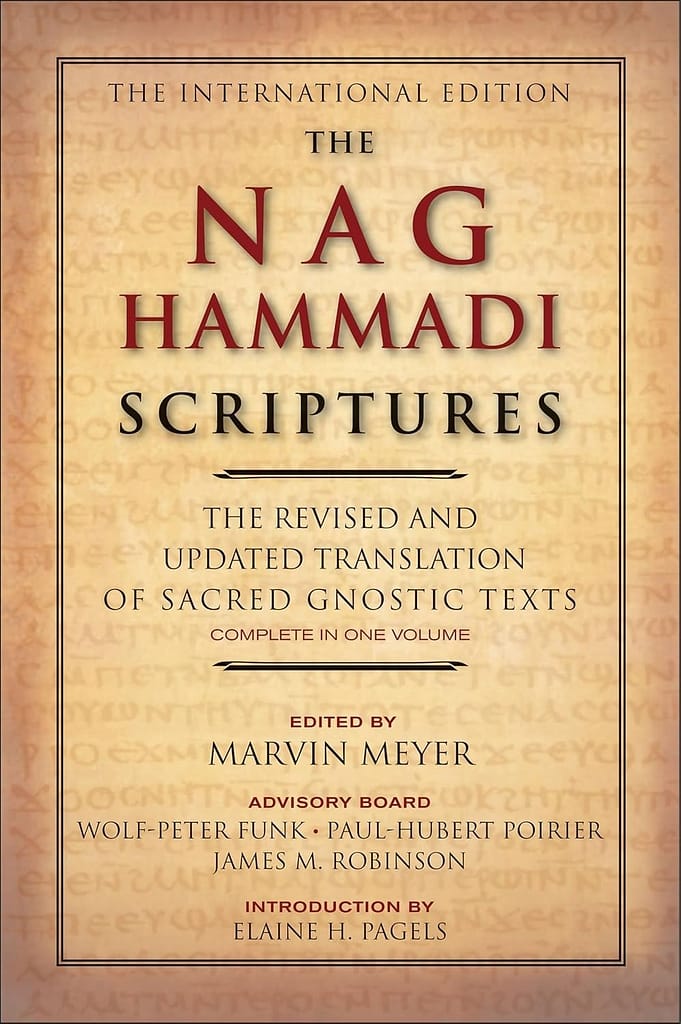
A Library Buried for 1,600 Years: The Secrets of the Nag Hammadi Scriptures
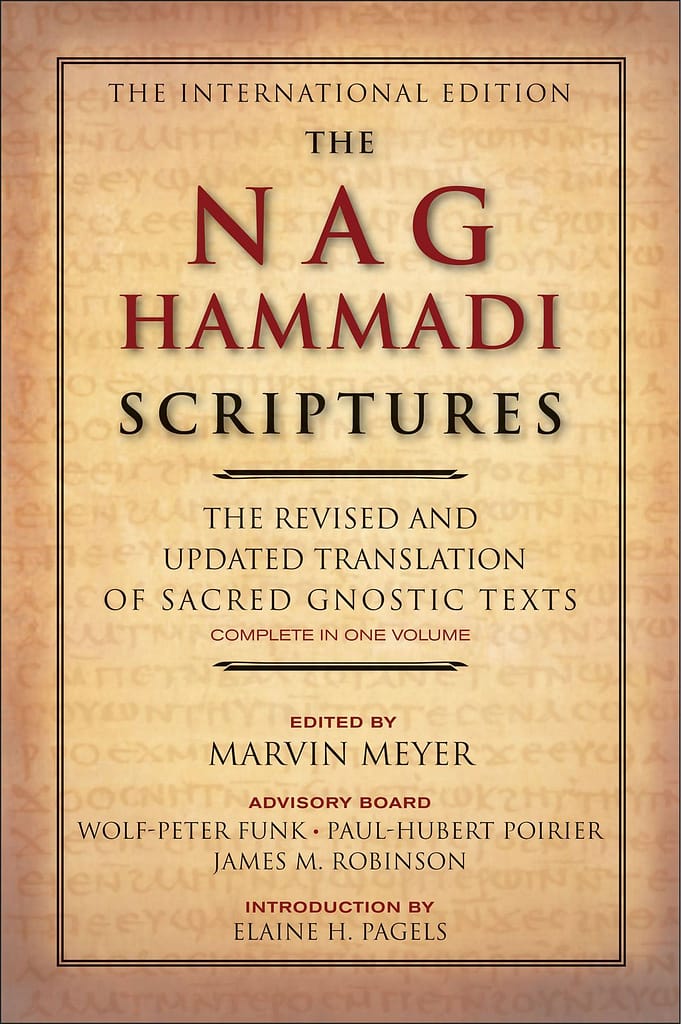
In December 1945, near the town of Nag Hammadi in Upper Egypt, a local farmer named Muhammad ‘Ali al-Samman made a discovery that would forever change our understanding of early Christianity. While digging for fertilizer near the cliffs of the Jabal al-Tarif, his spade struck a large, sealed earthenware jar.
Hesitating at first, fearing a jinn or spirit might be trapped inside, he eventually smashed the jar. He did not find gold, but something far more valuable: a collection of thirteen leather-bound papyrus books, or codices. After a long and complex journey through the black market, during which some pages were unfortunately burned for fuel, this “library” was eventually secured by scholars. It proved to be a treasure trove of lost Christian writings, a window into a form of belief that had been ruthlessly suppressed and almost completely erased from history.
What’s Inside the Jar?
The Nag Hammadi library consists of 52 treatises, or texts, written in the Coptic language. While they vary in style, most are considered “Gnostic” Christian texts. Gnosticism was a major spiritual movement that flourished in the first few centuries CE alongside what would become orthodox Christianity.
Some of the most significant texts in the collection include:
The Gospel of Thomas: Perhaps the most famous text, this is not a narrative of Jesus’s life, but a collection of 114 secret “sayings” of Jesus. It begins with the line, “These are the secret sayings that the living Jesus spoke and Didymos Judas Thomas recorded.” It presents a mystical, enigmatic Jesus whose teachings are about finding the “Kingdom of God” within oneself.
The Gospel of Philip: A collection of mystical reflections on sacraments, spiritual relationships, and the nature of Christ. It is famous for its controversial description of Mary Magdalene as Jesus’s “companion,” a detail that has fueled endless speculation.
The Apocryphon of John (The Secret Revelation of John): This is a classic Gnostic text that completely upends the story of Genesis. It reveals a complex creation myth involving a transcendent, unknowable true God and a lesser, arrogant deity called the “Demiurge” (or Yaldabaoth) who imperfectly created the material world and mistakenly believes he is the only God.
The Gnostic Worldview: A Radically Different Christianity
The reason these texts were considered so dangerous by the early church is that they presented a worldview fundamentally at odds with orthodox doctrine. Here’s a direct comparison of their core beliefs:
ON GOD:
Orthodox View: A single, benevolent creator God who made the physical world and declared it “good.”
Gnostic View: A remote, unknowable, true God. The material world was created by a lesser, flawed deity (the Demiurge).
ON THE WORLD:
Orthodox View: God’s good creation, though fallen due to human sin.
Gnostic View: A prison. A flawed imitation of a higher spiritual reality.
ON HUMANITY:
Orthodox View: Created in God’s image, but tainted by Original Sin.
Gnostic View: Divine spirits (sparks of light) trapped in material bodies of darkness and forgetfulness.
ON SALVATION:
Orthodox View: Achieved through faith in Jesus Christ and his atoning death and resurrection.
Gnostic View: Achieved through Gnosis, a secret, intuitive knowledge that awakens the divine spark within.
ON JESUS:
Orthodox View: The unique Son of God, who died for humanity’s sins.
Gnostic View: A spiritual revealer, a guide who came to bring the secret knowledge (Gnosis) needed to escape the material world.
Why is the Nag Hammadi Library So Important?
A Voice for the “Losers”: Before 1945, almost everything we knew about Gnosticism came from the polemical attacks written by its orthodox enemies, like the church father Irenaeus. The Nag Hammadi library was the first time we could hear the Gnostics speak in their own words.
Rewriting Early Christian History: The discovery proved that early Christianity was not a single, monolithic movement. For the first few centuries, it was a “cacophony of voices,” a diverse and often conflicting marketplace of different Christianities, all competing for followers.
A New Perspective on Jesus: These texts provide portraits of Jesus that are radically different from the four canonical gospels. They offer a “fifth gospel” of sorts, a view of Jesus as a teacher of mystical wisdom, whose goal was enlightenment rather than atonement.
The Nag Hammadi library is a stark reminder that history is written by the victors. Buried in a jar, likely to protect them from the book-burning campaigns of the increasingly powerful orthodox church, these texts waited for sixteen centuries to tell their side of the story. They reveal a lost path of Christianity, one focused on inner knowledge, spiritual awakening, and the quest to remember our own divine origins.