The Mind of God: Unlocking the Secret Dialogues of the Corpus Hermeticum
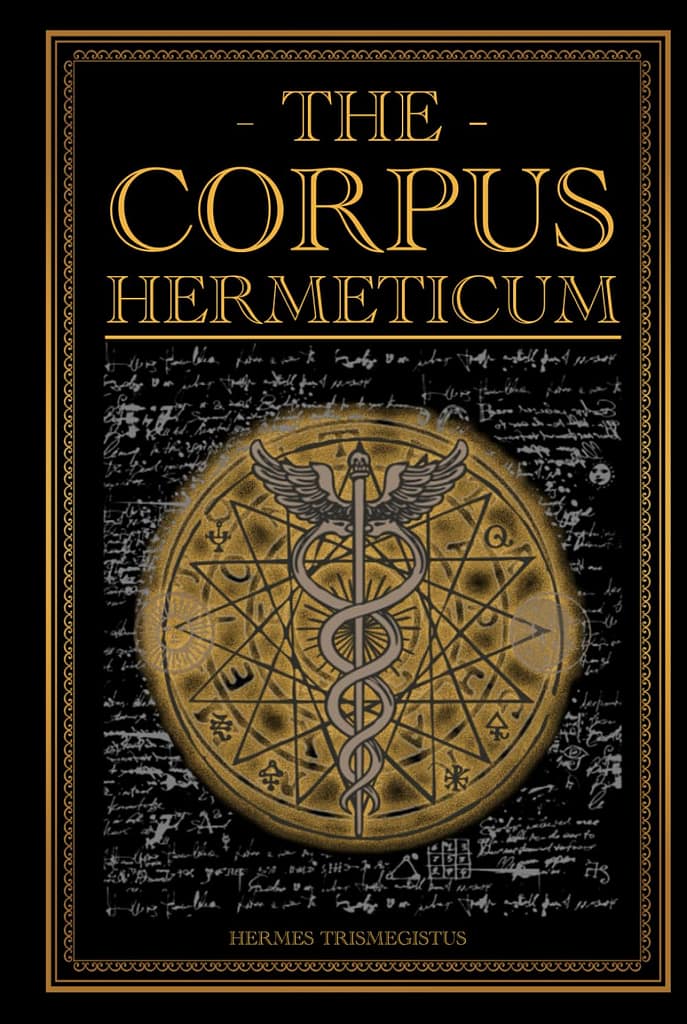
What if the path to salvation was not through faith, but through knowledge? What if humanity held a divine spark, a fragment of the universal mind, allowing us to understand the cosmos and our place within it? This is the radical and profound premise of the Corpus Hermeticum.
The Corpus Hermeticum is a collection of philosophical texts from the early centuries CE, originating in the cultural melting pot of Roman Egypt. They are written as a series of dialogues, primarily attributed to a legendary teacher named Hermes Trismegistus, “The Thrice-Greatest.” This figure is a syncretic combination of the Greek god Hermes (the messenger) and the Egyptian god Thoth (the scribe of the gods and master of wisdom), representing the fusion of Greek philosophy and Egyptian theology.
These texts were lost to the Latin West for a thousand years until they were rediscovered and translated in Renaissance Italy. They had a seismic impact, as they were believed to be the pristine, original theology of the ancient world, predating even Moses. For a time, they were held in as high regard as the works of Plato.
The core of Hermetic philosophy can be understood through a few key concepts:
The Divine Mind (Nous): The Hermetica posits that the ultimate reality, God, is a transcendent, infinite, and unknowable Mind. The entire universe, the stars, the earth, life itself, is a mental creation, a thought within this Divine Mind. It is a cosmos created not from physical matter, but from pure consciousness.
The Divine Spark: Unlike other creatures, humanity is a “second god.” We are a paradox: a mortal, physical body inhabited by an immortal, divine spark, a fragment of the Divine Mind itself. This spark is the source of our ability to reason, to create, and to comprehend the universe.
Gnosis: Salvation Through Knowing: The central goal of the Hermetic path is not salvation through faith or adherence to law, but through Gnosis, a direct, intuitive, and transformative knowledge of the divine. By turning inward and understanding the true nature of our own consciousness, we can come to know the Mind of God. The path is one of self-realization, of remembering our divine origin.
The purpose of the Corpus Hermeticum is to act as a guide for the soul’s ascent. It teaches that through contemplation, purification of the self, and a deep understanding of the cosmos (often expressed in the famous maxim “As Above, So Below”), one can transcend the material world and reunite with the divine source.
The influence of these ideas is difficult to overstate. The Corpus Hermeticum is a foundation stone of Western Esotericism, and its concepts have echoed through centuries of alchemy, Rosicrucianism, astrology, and ceremonial magic. It represents a powerful alternative spiritual path, one where the human mind is not a vessel for sin, but a key that can unlock the very secrets of creation.
What do you believe is the path to the divine: unwavering faith, righteous works, or as the Hermetica suggests, a profound and direct knowledge (Gnosis) of oneself and the universe? Let me know in the comments!