Stoicism: The Ancient Philosophy That Still Works in Modern Life
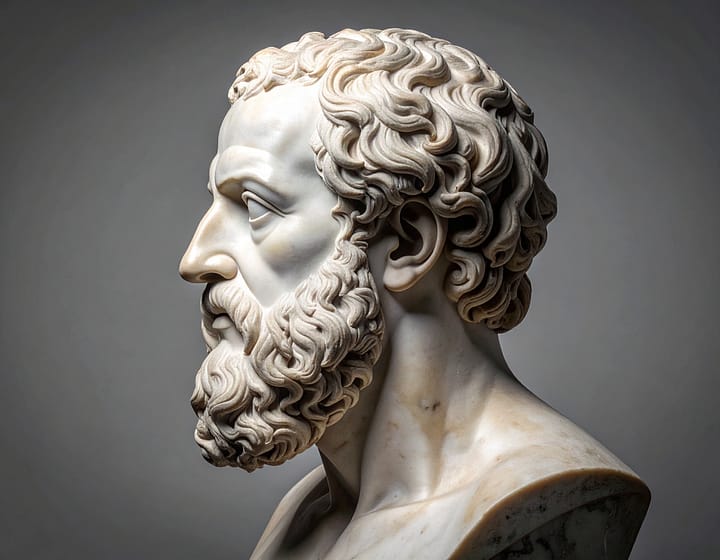
In a world of constant notifications, endless news cycles, and things beyond our control, an ancient philosophy from over 2,000 years ago is experiencing a remarkable revival. Stoicism, once the guiding philosophy of Roman emperors and slaves alike, offers practical wisdom for navigating the chaos of modern life.
What Is Stoicism?
Stoicism was founded around 300 BCE by Zeno of Citium in ancient Greece. The philosophy teaches that virtue is the only true good, and that we should focus our energy on what we can control while accepting what we cannot. The Stoics believed the universe operates according to reason (logos) and that living virtuously means living in harmony with both our human nature and the nature of the cosmos. The name comes from the Stoa Poikile, the “painted porch” in Athens where Zeno taught his students.
The Three Stoics Whose Words Survived
While early Stoic philosophers like Zeno and Chrysippus wrote prolifically (Chrysippus allegedly wrote over 700 books), almost nothing from the founding generations survives except fragments and secondhand accounts. We’re fortunate that complete works from three later Stoics have come down to us—and remarkably, they represent three vastly different positions in Roman society.
Seneca (c. 4 BCE – 65 CE): The Wealthy Advisor
Lucius Annaeus Seneca was one of the richest men in Rome, a renowned playwright, and an advisor to Emperor Nero. His works include “Letters to Lucilius” and “On the Shortness of Life.” Despite his wealth and power, Seneca’s life was turbulent—he was exiled to Corsica by Emperor Claudius and eventually forced to commit suicide by Nero.
His writing is practical and accessible, filled with advice on how to live well regardless of external circumstances. He urged readers to choose role models, to use time wisely, and to remember that wealth and status are indifferent to true happiness.
Epictetus (c. 50 – c. 135 CE): The Former Slave
Born into slavery in Phrygia (in present-day Turkey), Epictetus was owned by Epaphroditus, who allowed him to study philosophy under the Stoic teacher Musonius Rufus. After gaining his freedom when Nero died, Epictetus became a teacher himself. He was later expelled from Rome by Emperor Domitian in 93 CE along with other philosophers.
Epictetus never wrote anything himself—his student Arrian recorded his teachings in the “Discourses” and the “Enchiridion” (Handbook). His philosophy is stripped to its essence: focus on what’s in your control (your thoughts, actions, and reactions) and accept what isn’t. His famous maxim: “endure and renounce.”
Marcus Aurelius (121 – 180 CE): The Philosopher Emperor
Marcus Aurelius ruled the Roman Empire from 161 to 180 CE, one of the most powerful positions in the ancient world. Yet during military campaigns and amid the pressures of empire, he kept a private journal never intended for publication. These writings, known as “Meditations,” reveal a man constantly reminding himself of Stoic principles.
Marcus was heavily influenced by Epictetus and studied under several Stoic teachers. His “Meditations” are essentially his personal notes to himself—reminders about virtue, mortality, and maintaining equanimity in the face of hardship.
The Core Stoic Teaching: The Dichotomy of Control
At the heart of Stoicism lies a deceptively simple insight: some things are within our control, and some things aren’t. We control our own thoughts, judgments, and actions. We don’t control other people, the weather, the past, or the future.
The Stoics argued that suffering comes from trying to control what we cannot, or from failing to control what we can. Peace comes from accepting this distinction and directing our energy appropriately.
Why Stoicism Matters Today
The philosopher Pierre Hadot pointed out that for the Stoics, philosophy wasn’t just a set of beliefs—it was a way of life requiring constant practice and training. Stoicism offered exercises and techniques, not just theories.
In our current era, Stoicism has experienced a major revival. The philosophy’s emphasis on resilience, emotional regulation, and focusing on what we can control resonates with people facing information overload, economic uncertainty, and social pressures. Stoic principles have even influenced modern cognitive behavioral therapy, particularly through the work of psychologist Albert Ellis.
The Timeless Appeal
What makes Stoicism remarkable is its range. An emperor and a slave found the same philosophy useful. A wealthy playwright and a water carrier both practiced it. Whether you’re dealing with success or failure, health or illness, praise or criticism, Stoic principles apply.
As the ancient sources tell us, the Stoics believed virtue is sufficient for happiness. External circumstances—wealth, health, reputation—are “indifferents.” They’re preferred when we have them, but they don’t determine our wellbeing. Only our character, our choices, and our virtue matter for living a good life. Two thousand years later, that’s still a radical, and liberating, idea.
Have you explored Stoic philosophy? What ancient wisdom speaks to you in modern life?