Books & Film
The Book That Burned a Mystic: Why Marguerite Porete and Her ‘Mirror’ Were So Dangerous
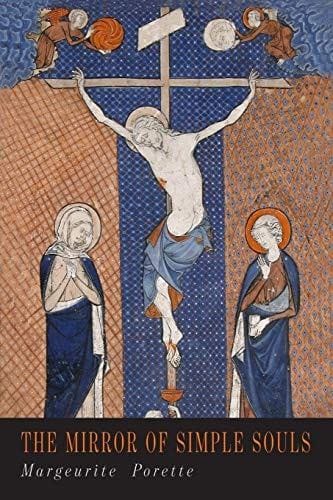
On June 1, 1310, a crowd gathered in the Place de Grève in Paris to witness an execution. A woman named Marguerite Porete was led to a stake, and alongside her, copies of the book she had written. She was burned as a relapsed heretic, a final and brutal judgment from the Medieval Inquisition.
Her crime was writing one of the most profound and beautiful works of Christian mysticism: The Mirror of Simple Souls. But the story of her condemnation is more complex than just the words on the page. It’s a story about a revolutionary idea, but also about the unshakeable conviction of a woman who refused to bend to the most powerful institution on Earth.
The Radical Vision: A Soul Annihilated in Love
At its heart, The Mirror of Simple Souls is a poetic and elegant dialogue between characters like Lady Love, Reason, and the Soul. It describes the soul’s journey through seven stages of grace to reach a state of perfect union with God.
Porete called this final stage the “Annihilated Soul.”
This wasn’t destruction, but a total transformation. She argued that the soul could become so completely absorbed in God’s love that its own self-will, its ego, and its personal desires are entirely dissolved. Like a drop of water returning to the sea, the soul doesn’t disappear but becomes one with the whole. It ceases to want anything for itself and becomes a “simple mirror,” doing nothing but perfectly reflecting the divine will and love.
The Heresy: Why Was This Vision So Threatening?
This beautiful, mystical concept contained a seed of revolution that the medieval Church could not tolerate. Porete argued that once a soul reaches this state of perfect, direct union with God, it has effectively transcended the need for the Church’s external structures.
In the book, Lady Love explains that such an “annihilated” soul:
No longer needs to practice the standard virtues (as its will is now God’s will).
No longer needs to go to confession or perform penance.
No longer needs the sacraments or the mediation of priests.
For an institution whose entire spiritual and temporal authority rested on being the essential intermediary—the bridge—between God and humanity, this was spiritual anarchy. Porete’s book wasn’t just a guide for personal devotion; it was an implicit declaration of spiritual independence. It suggested that the highest state of grace was one where the Church itself became obsolete.
The Crime, The Trial, and The Defiance
So, was Marguerite burned solely because of the book? Yes, but it was her unwavering and defiant actions in defense of her vision that sealed her fate.
She Was a “Relapsed” Heretic: This was not her first offense. Years before her final arrest, her book had already been condemned and publicly burned, and she had been strictly forbidden from circulating it further. She completely disobeyed this order. In the eyes of the Inquisition, this made her a “relapsed heretic,” a far more serious charge for which the punishment was almost always death.
She Refused to Recant: During her 18 months of imprisonment in Paris, she was given the standard opportunity to save her own life. All she had to do was recant her beliefs and admit her book was heretical. She refused. She stood by her work and the divine truth she believed it contained.
Her Ultimate Act of Defiance: Silence: Most damning of all, Marguerite Porete held her inquisitors in complete contempt. For a year and a half, she refused to speak to them, to answer their questions, or to take the oath required by the court. This stubborn refusal to cooperate, known as contumacy, was seen as an admission of guilt. By refusing to even recognize the court’s authority to judge her, she was acting as if she were above it—ironically “proving” their point that her beliefs led to a dangerous disregard for the Church.
The book was the crime, but her courageous defiance made her execution inevitable. She would not renounce her vision, and she would not grant her accusers the legitimacy of a response.
A Legacy That Wouldn’t Burn
Though Marguerite and her books were turned to ash, her ideas were too powerful to be extinguished. Scribes had secretly continued to copy The Mirror of Simple Souls. It circulated anonymously for the next several centuries, becoming a beloved and influential work of mysticism in monasteries and lay communities across Europe. Readers cherished its profound insights, completely unaware that it had been written by a woman condemned and executed by the Church. It wasn’t until 1946 that a scholar finally connected the dots, identifying the popular anonymous text as Marguerite Porete’s long-lost, forbidden masterpiece.
Marguerite’s story is a chilling reminder of the price of radical thought, but it is also a powerful testament to a woman of genius and unyielding courage. She was a mystic who dared to articulate a vision of absolute spiritual freedom and paid the ultimate price to defend it.
