The Confusion Around the Word “Occult”
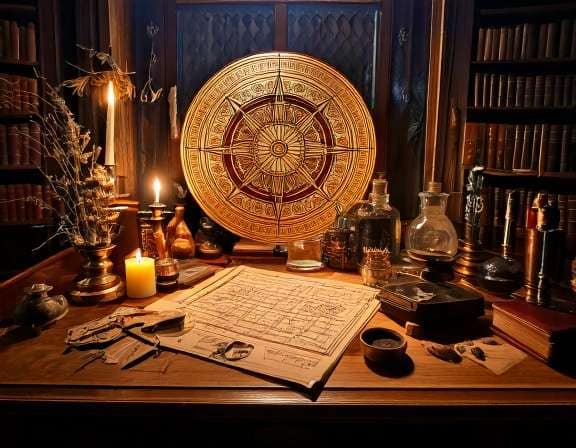
The word occult has always carried a certain mystery—ironically fitting for a word that literally means “hidden.” Yet in modern times, few terms have been more misunderstood or misused. Say the word occult, and many people immediately picture dark rituals, pentagrams, or shadowy figures invoking forbidden forces. But that image is a distortion born from centuries of fear, mistranslation, and religious bias.
What “Occult” Really Means
The root of the word occult comes from the Latin occultus, meaning “hidden,” “concealed,” or “secret.” It refers to knowledge or phenomena not easily seen or understood—things beyond the surface of everyday life.
In its original sense, the occult sciences included astrology, alchemy, and natural magic—the early studies of how unseen forces (like magnetism, planetary influence, or consciousness) might shape the physical world. In fact, many founders of modern science, such as Isaac Newton, studied what we would now call occult subjects. Newton wrote extensively on alchemy and Biblical prophecy, viewing them as part of the same quest for hidden truths.
When “Occult” Became a Dirty Word
So how did a term for “hidden wisdom” come to be synonymous with “evil”? The answer lies in history and fear.
As Western religion solidified its doctrines, anything that fell outside its authority—especially knowledge that encouraged direct personal exploration of the divine—was branded as dangerous. Medieval and early modern Church leaders condemned alchemy, astrology, and magic not because they were inherently dark, but because they challenged institutional control over spiritual truth.
Over time, the word occult became linked to heresy and witchcraft. Pop culture later cemented this misunderstanding through horror movies and sensational books, reducing centuries of esoteric study into a caricature of devil worship and superstition.
The Modern Occult Revival
Today, the word occult is being reclaimed by many who see it for what it truly is: a study of hidden aspects of reality. Modern occultists explore subjects like symbolism, consciousness, energy, and archetypes—not to summon demons, but to understand the unseen patterns that shape our lives and the universe.
In truth, anyone who seeks to uncover what lies beneath appearances—whether through meditation, psychology, or physics—is engaging with the spirit of the occult. It’s the pursuit of deeper understanding, the curiosity to look beyond the veil.
Why Words Matter
When we mistake occult for “evil,” we lose an entire dimension of human inquiry. The occult reminds us that mystery still exists—that not everything can be measured, and not every truth fits neatly into scientific or religious boxes.
Perhaps the real power of the occult lies not in its secrecy, but in its invitation: to look closer, question deeper, and remember that what is hidden is not always dark.